
Feed enzymes are one of the most powerful tools in modern animal nutrition — yet most producers are using them wrong. Is your feed enzyme strategy actually working for you, or are you just pouring expensive additives down the drain?
In the high-stakes world of animal nutrition, feed represents up to 70% of total production costs. Feed enzymes are supposed to be the "magic bullet" that unlocks hidden energy, captures phosphorus, and slashes those costs. But here’s the reality: many producers are treating feed enzymes like a commodity "plug-and-play" ingredient rather than a precision-engineered biological tool.
At McBoeck, we don’t just move pallets of product. We act as strategic architects for your nutritional program. As the trusted U.S. gateway to Winovazyme’s world-class technology, we see the gap between "adding a feed enzyme" and "optimizing a feed enzyme system."
If you want to stop leaving money on the barn floor, you need to stop making these seven common feed enzyme mistakes.
1. Feed Enzymes and Thermostability: Ignoring the Heat of the Moment
The most common mistake happens before the bird or pig even takes a bite. You’ve selected a high-performing feed enzyme, but did it survive the pellet mill? Many feed enzymes begin to denature at temperatures as low as 70°C. If your pelleting process hits 80°C or higher, you might be feeding your livestock expensive, inactive protein.
The Fix: You need a feed enzyme solution designed for the modern mill. Winovazyme’s HT85 technology is a prime example of engineering for reality. It boasts a 97% recovery rate at 80°C. When you use a truly thermostable feed enzyme, you aren't just guessing if it works: you’re guaranteeing it.
🧠 McBoeck Insight: We often see producers over-dosing "cheap" feed enzymes to compensate for heat loss. This is a losing game. By switching to a heat-stable variant like HT85, you can lower inclusion rates and increase reliability. It’s about quality over quantity. Learn more about thermostability standards at the American Society of Animal Science.
2. Static Dosing in a Dynamic Market: A Common Feed Enzyme Mistake
Are you still using the same feed enzyme inclusion rate you were using three years ago? The nutritional profile of corn, soy, and alternative grains shifts with every harvest, every region, and every climate cycle. Using a static "standard" dose in a dynamic biological system is a recipe for inefficiency.
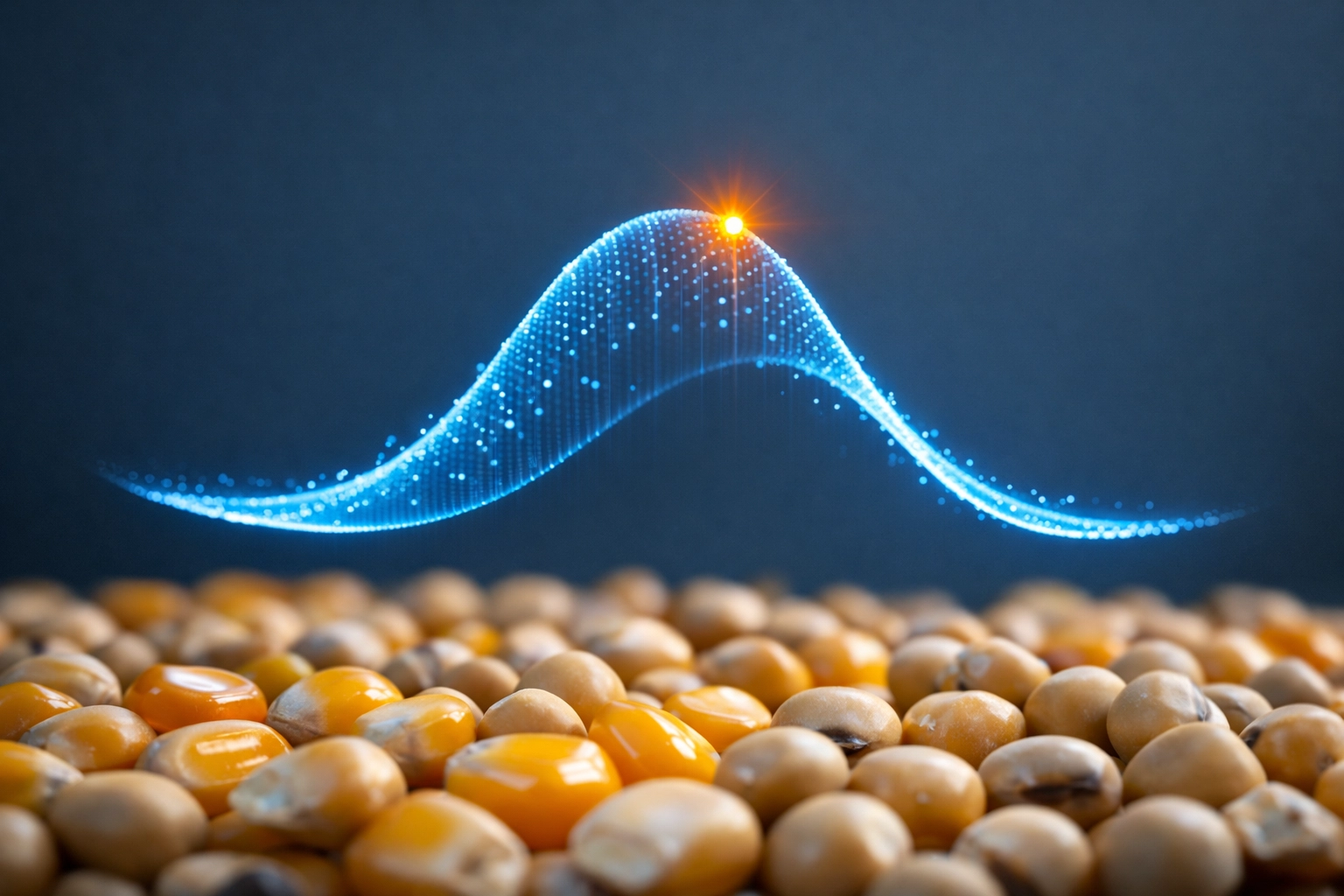
The Fix: Embrace the dose-response curve. High-quality feed enzymes aren't binary (on/off). Their efficacy follows a curve based on substrate concentration. We help our partners analyze their current raw material data to calibrate dosing that reflects the actual challenge in the gut.
3. The "Single Feed Enzyme" Trap
Many producers fall into the trap of thinking a single Phytase feed enzyme is enough. While Phytase is the foundational cornerstone of agriculture and animal nutrition, it can’t do everything. If you aren't addressing the Non-Starch Polysaccharides (NSPs) or the protein digestibility, you’re leaving a massive amount of "anti-nutritional" factors in the feed.
The Fix: Think in synergies. The real magic happens when you deploy a "cocktail" approach of multiple feed enzymes:
- Phytase: Unlocks phosphorus and minerals.
- NSPases (Xylanase/Glucanase): Breaks down fiber and reduces gut viscosity.
- Protease: Maximizes protein utilization and improves gut health.
When these three feed enzymes work together, the result isn't additive: it’s exponential.
4. Underestimating Substrate Variability in Your Feed Enzyme Program
Not all corn is created equal. A drought in the Midwest or a wet season in Brazil changes the chemical structure of your grains. If your feed enzyme program doesn't account for whether you are feeding corn/soy versus alternative grains like wheat, barley, or DDGS, you are missing the target.
The Fix: Tailor your feed enzyme selection to your substrate. If you're incorporating more high-fiber alternatives to save costs, your Xylanase needs to be more robust. At McBoeck, we work as a "strategic advisor" to help you pivot your feed enzyme strategy as your procurement team pivots the ingredient list.
5. Poor Uniformity: The "Ghost" Feed Enzyme Effect
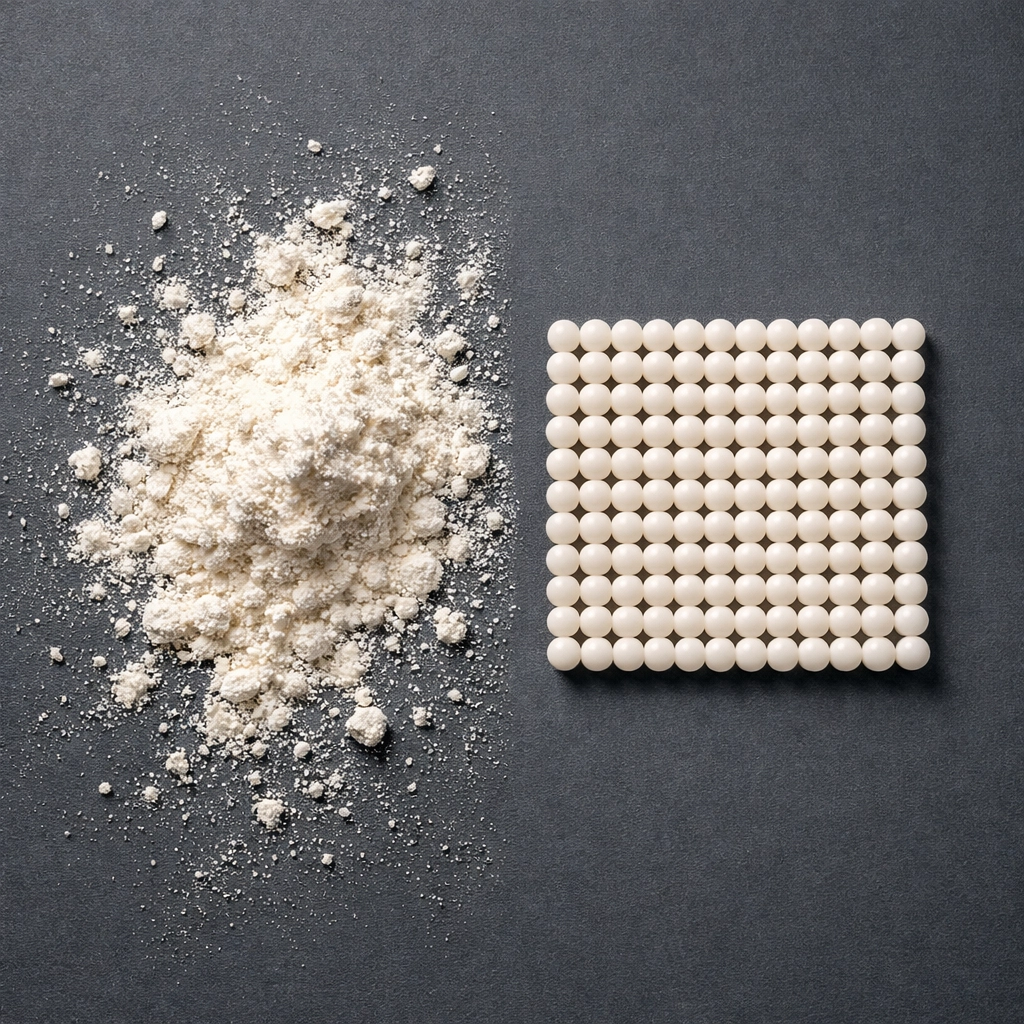
You can have the best feed enzyme in the world, but if it doesn't mix uniformly in the feed, it’s useless. Poor flowability and dust-heavy powders lead to "hot spots" where some animals get 5x the dose and others get zero. This leads to inconsistent growth rates and a drop in overall flock or herd performance.
The Fix: Demand superior granule quality. Winovazyme’s advanced granulation technology ensures that the feed enzyme particles are uniform, dust-free, and highly flowable. This ensures that every mouthful of feed contains the precise amount of feed enzyme required for optimal digestion.
6. Reactive Procurement: A Hidden Risk in Your Feed Enzyme Supply Chain
In the current global climate, waiting until your silo is empty to order more feed enzymes is a dangerous game. Most distributors are middle-men with long lead times. If you run out of feed enzyme for even a few days, your animals’ digestive systems will struggle to adjust, leading to "leaky gut" and performance crashes.
The Fix: Partner with a gateway that controls the logistics. McBoeck maintains significant feed enzyme stock in Houston and Los Angeles. We don't just "take orders"; we manage a traceable and audited supply chain.
🧠 McBoeck Insight: Our standard is <48-hour delivery for stocked feed enzyme items. In a world of disruptions, we act as your strategic buffer, ensuring that your production line: and your animals: never skip a beat.
7. Price per KG vs. Cost per Ton of Gain: The True Cost of Feed Enzymes
This is the most expensive feed enzyme mistake of all. Procurement departments often celebrate a "win" by sourcing a feed enzyme that is $1 cheaper per kilogram. But if that feed enzyme has lower activity, poor thermostability, or no synergistic benefits, your "Cost per Ton of Gain" will actually skyrocket.
The Fix: Shift the conversation to ROI. The goal isn't to buy the cheapest feed enzyme powder; it's to produce the cheapest pound of meat or dozen eggs. A high-performance feed enzyme might cost more upfront, but if it improves Feed Conversion Ratio (FCR) by even 2-3 points, the ROI is massive.
🧪 Real-World Application: Consider a producer moving 100,000 tons of feed. A 2-point improvement in FCR, powered by a superior Protease/Phytase feed enzyme blend, can save tens of thousands of dollars in raw ingredient costs: far outweighing the marginal price difference of the feed enzyme itself.

The McBoeck Approach: Your Strategic Feed Enzyme Partner
At McBoeck, we believe that the chemical industry needs more than just suppliers; it needs architects. Our relationship with Winovazyme allows us to bring world-class feed enzyme R&D directly to the American producer, backed by a mission and vision centered on efficiency and sustainability.
We don't just sell feed enzymes. We provide a consultative framework that looks at:
- Your Mill Conditions: To ensure thermostability matches.
- Your Ingredients: To match feed enzymes to substrates.
- Your Goals: To maximize ROI, not just minimize invoice price.
The "old way" of buying feed enzyme additives is dying. The "new way" is about precision, transparency, and strategic partnership.
Are you ready to optimize your feed enzyme program?
The market in 2026 demands more than "good enough." It demands data-driven nutrition. Whether you are in food and beverages or large-scale animal production, the logic remains the same: optimize the feed enzyme biology to protect the bottom line.
Take the Next Step: Don't let hidden inefficiencies erode your margins. Use our latest tool to see the real impact of your feed enzyme nutrition program.
📌 Download our 2026 Feed Enzyme ROI Calculator or contact our technical team today to schedule a consultation on how we can architect a better feed enzyme strategy for your operation.
Want to learn more about our journey and how we became a leader in professional chemical services? Read our history here.
Frequently Asked Questions About Feed Enzymes
What are feed enzymes and why are they important in animal nutrition?
Feed enzymes are biological catalysts added to animal feed to improve nutrient digestibility and absorption. They break down complex feed components—such as phytate, non-starch polysaccharides (NSPs), and proteins—that animals cannot efficiently digest on their own. By unlocking these nutrients, feed enzymes can reduce feed costs, improve Feed Conversion Ratio (FCR), and lower the environmental impact of phosphorus excretion.
What temperature should a thermostable feed enzyme withstand during pelleting?
A thermostable feed enzyme should maintain high activity at pelleting temperatures of 80°C or higher. Winovazyme’s HT85 technology, for example, delivers a 97% recovery rate at 80°C, ensuring the enzyme survives the conditioning and pelleting process and remains biologically active when the animal consumes the feed.
What is the difference between Phytase, Xylanase, and Protease in a feed enzyme program?
Phytase unlocks phosphorus and other minerals bound in phytate, reducing the need for inorganic phosphate supplementation. Xylanase (an NSPase) breaks down the cell walls of fibrous feed ingredients like wheat and barley, reducing gut viscosity and improving energy utilization. Protease maximizes protein digestibility, improving amino acid absorption and reducing nitrogen excretion. Using all three together produces synergistic effects that are greater than each enzyme used alone.
How does feed enzyme inclusion rate affect ROI?
A higher-quality, correctly dosed feed enzyme may cost more per kilogram but delivers a lower cost per ton of gain. For example, a 2-3 point improvement in FCR across 100,000 tons of feed—enabled by a precision-dosed Phytase and Protease blend—can save tens of thousands of dollars in raw ingredient costs, far outweighing the price premium of the enzyme itself.
How quickly can a McBoeck feed enzyme order be delivered in the United States?
McBoeck maintains strategic feed enzyme inventory in Houston and Los Angeles, enabling standard delivery within 48 hours for stocked items. This ensures supply chain continuity and eliminates the risk of production disruption caused by enzyme shortages.